Valeo Uses Safety Data to Redefine In-Car UX
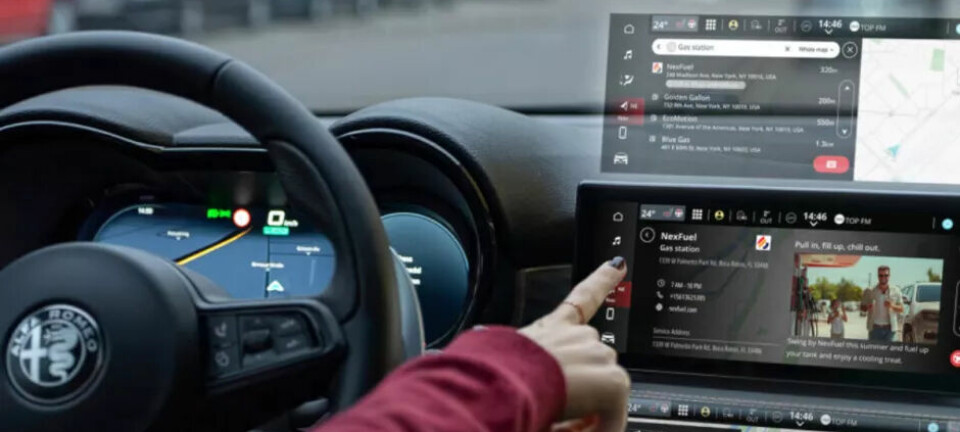
Valeo sees the cockpit as a digital control centre that must adapt to individual needs, regional expectations and changing usage scenarios.
Valeo
Valeo is reshaping the vehicle interior around AI, in-cabin sensing and software, linking safety data with personalised user experiences and new digital services.
Valeo is placing the in-vehicle user
experience at the centre of its software-defined vehicle strategy. The
supplier argues that the interior is becoming the key
space where personalisation, safety, visualisation and digital services come
together. Rather than treating the cockpit as a standalone display area,
Valeo is positioning it as an adaptive environment that responds to user
context, supports trust in automation and creates new software-based value on
top of existing vehicle hardware.
A personalised and context-aware digital space
For Valeo, the future of the
vehicle interior is no longer defined by screens alone. The company sees
the cockpit as a digital control centre that must adapt to individual needs,
regional expectations and changing usage scenarios. In that sense, the in-car
experience is becoming a strategic field of differentiation, especially as software-defined vehicles shift more value from
hardware performance to digital interaction.
Valeo’s leadership describes this transition through three
broad priorities: personalisation, emotional connection and safety.
Personalisation, in its view, is no longer limited to infotainment settings or
design choices. Instead, the vehicle should recognise context and respond
accordingly, whether the driver is commuting, travelling on holiday or showing
signs of fatigue. That idea of hyper-personalisation depends on a system
architecture that can interpret situations rather than simply react to commands.
Where UX and safety begin to merge
The company also sees emotional continuity as increasingly
important in automated driving. As more driving functions are delegated to the
vehicle, users need to feel that the system understands them and behaves in a
way that is intuitive and trustworthy. Valeo’s argument is that future cockpit design will be judged not only by what a
function does, but by whether its behaviour feels coherent, expected and
reassuring.
Safety forms the third pillar of this strategy, but Valeo is
broadening the meaning of the term. The focus is no longer just functional
safety in the traditional engineering sense. It is also about helping users
understand what the vehicle sees, why it reacts in a certain way and whether it
can be trusted in increasingly automated driving
situations. This is where UX and safety begin to merge.
Key facts about Valeo’s new in-car UX strategy
What is Valeo’s new cockpit strategy?
Valeo wants to turn the vehicle interior into a
context-aware digital space shaped by AI, sensing, software and safety logic.
Why is the in-car experience becoming more important?
In software-defined vehicles, differentiation increasingly comes from digital
interaction, personalisation and connected services inside the cabin.
How is safety data used for user experience?
Valeo combines perception and monitoring data with displays and AI so users can
better understand vehicle behaviour and system decisions.
Which technologies are involved?
The strategy includes driver monitoring, occupant sensing, interior radar,
augmented reality displays, AI-based analysis and connected software services.
What does Valeo want to achieve with this approach?
The aim is to create a more intuitive and personalised vehicle
experience while opening up new software-based business models.
How does this change Valeo’s role?
Valeo is moving beyond component supply towards a software-capable platform
approach built on existing vehicle hardware.
How Valeo combines sensing, AI and visualisation
That convergence is most visible in Valeo’s effort to
connect exterior perception systems with interior displays and interaction
logic. Functions that were once separated between ADAS and cockpit design are
now being brought together. Sensor data from
cameras, radar and other perception systems is no longer meant to stay hidden
in the background. Instead, it should be translated into a visual and
intuitive layer that allows drivers to understand what the car has detected in
real time.
Valeo is pursuing this through head-up displays, windscreen
projections and augmented reality overlays that place information directly into
the driver’s field of view. The goal is not simply a more advanced display, but
greater transparency around machine perception. If the car detects another
vehicle, a cyclist or a potential hazard, the user should be able to see that
recognition reflected in the interface before a braking or driving intervention
occurs. In this way, visualisation becomes part of building trust in automated
systems.
How the vehicle interior becomes part of everyday digital
life
Inside the vehicle, Valeo is combining driver monitoring,
occupant sensing and interior radar with AI-based analysis. According to the company’s
approach, the system should be able to assess attention, fatigue, distraction
and activity levels, while also identifying how many people are in the car and
whether children or other passengers need to be considered. This creates a
cockpit that is increasingly aware of both the outside environment and the
conditions inside the cabin.
Valeo argues that this matters because the vehicle must fit more naturally into people’s wider
digital lives. Users who are used to smartphones, cloud services and app
ecosystems expect the same continuity in the car. That means interaction
needs to be intuitive, fast and natural, ideally through voice or
conversational interfaces rather than layered menu structures. The vehicle, in
this view, should not feel like a separate technical system but like a
connected part of everyday digital behaviour.
Software platform for new in-car services
Valeo is also using this shift to redefine its own role in
the automotive value chain. Instead of seeing existing hardware primarily as a
fixed safety component, the company wants to turn installed sensors and
connected systems into a foundation for new software-based functions. This is
where the logic of the software-defined vehicle becomes commercially relevant:
hardware already in the field can gain new capabilities through updates and
additional software layers.
The company points to use cases such as predictive
maintenance, remote operations, vehicle-to-everything data sharing and
crowdsourced parking maps. What connects these services is that they rely on
sensor systems that are already present for safety or assistance purposes, but
can now support extra functions without requiring new hardware investment. This
marks a clear expansion from component supply towards a more platform-oriented
role.
One of the clearest examples is extended-reality
gaming in the vehicle. Valeo uses movement data, GPS information and
camera-based environment data to synchronise games with the actual motion of
the car. The company has already brought such a system into production with
Renault Korea, presenting it not simply as entertainment, but as a test case
for vehicle-specific app logic. The broader idea is that applications in the
car will only succeed if they offer something genuinely different from the
smartphone. For Valeo, that means software experiences built on uniquely
automotive data streams and interaction contexts.
Taken together, the company is outlining more than the
next cockpit generation. It is describing an interior in which sensing, AI,
visualisation, connectivity and continuous software updates increasingly work
as one architecture. The vehicle cabin becomes a strategic integration layer
where safety, user understanding and digital services overlap. For Valeo, that
changes not only the design of the in-car experience, but also the company’s
own identity: from supplier of perception and safety components to enabler of
personalised, expandable and software-led mobility experiences.